Toward the end of seminary, my New Testament professor dared us to use non-canonical texts in worship and study. He encouraged us to engage faithful people in authentic study of these words that were not included in the traditional canon. I respond really well to dares. It’s one of the things that I like about Christianity. I like the challenge. I like that Jesus has the gumption to say the poor will always be with us. Oh yeah? Well, we’ll see about that Jesus. We will just have to see about that. In the words of Barney Stinson: challenge accepted. Like I said, I respond really well to dares.
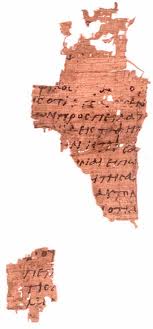
I took my seminary professor’s challenge to heart.
When National Geographic got everyone’s attention with their talk of the Gospel of Judas, I used the text in a sermon. Somehow, earlier this winter, I got into a conversation with our Wednesday morning Bible study about these mysterious texts outside the canon. Since I first studied them in college, these texts have challenged my identity as a Christian so perhaps it is not surprising that I talk about them, but I never would have expected this small group to want to study these texts together. Lo and behold, we are. I chose three texts for us to study together in the Easter Season. Of course, in the spirit of my seminary professor’s dare, I want to expand the conversation. So, this Sunday, I’ll preach the good news from the Gospel of Peter.
As I’m writing my sermon, I find myself asking big questions about what makes something sacred. Several years ago, when I attended the very first Young Clergy Women Conference at the College of Preachers, I preached a sermon to my small working group that used a piece of poetry with a lesson from the Bible. A woman who has since become a friend scolded me, saying, “You shouldn’t be exegeting that poem. The emphasis should be on the Bible.”
I find that phrase bouncing around in my head again as I write this sermon. I am preaching a text that is not in the canon. Our church fathers and mothers condemned this text as a heresy, but does that mean that these words shared by a community in Syria don’t have something to teach us about being faithful Christians? Isn’t all of life holy? Isn’t there holiness outside of the words that generations after generations have held to be sacred? Don’t we believe (at least in the United Church of Christ) that God is still speaking? Doesn’t that mean that God could be bigger than 66 books?
I honestly don’t know, but I’m up for the challenge.


 Cooking with Elsa
Leave a reply to Martha Spong Cancel reply